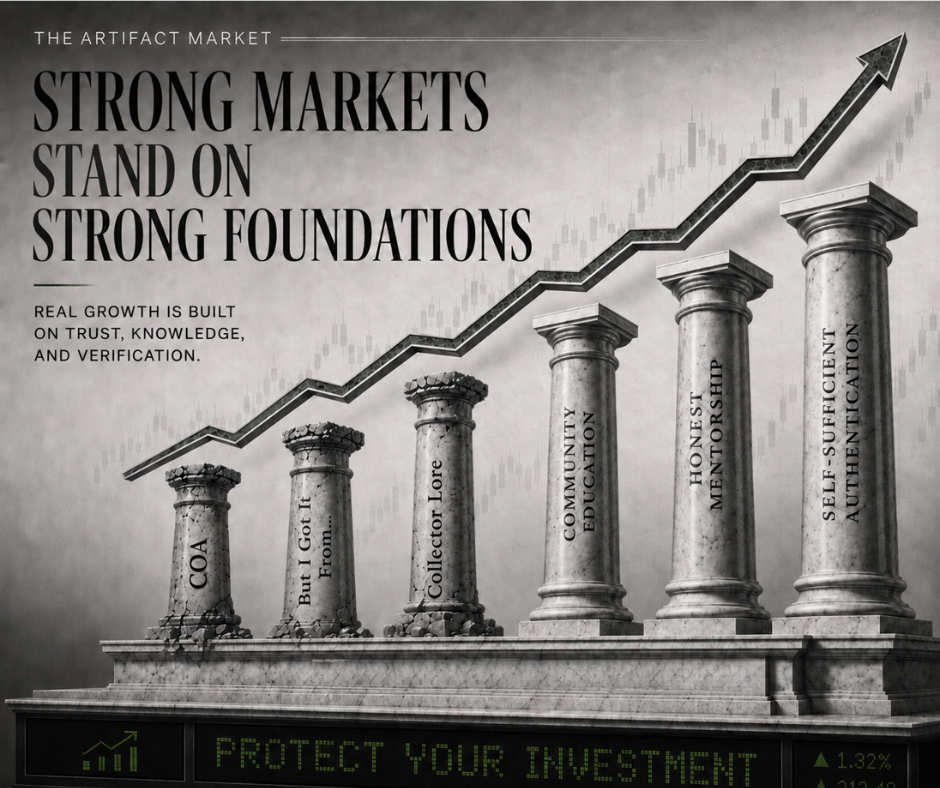
Why ancient artifacts remain one of the most resilient investments you can make — and what collectors must do to keep it that way.
Collecting & Investment
Opinions Change. Facts Do Not.
The artifact market has proven time and again that it can weather whatever the outside world throws at it. Economic downturns, market volatility, shifting financial landscapes — quality relics with solid provenance have quietly held and grown in value through all of it. The supply is absolutely fixed. You cannot manufacture more ancient history, and that changes the nature of this investment entirely.
But if this hobby teaches you anything, it is that the greatest challenges this market faces are rarely external. They come from within. Respected voices contradict themselves. Opinions shift with relationships and circumstance. And a collector who builds their knowledge on the opinions of others rather than on the relics themselves will always be on uncertain ground.
Opinions change. Facts do not.
The only foundation worth building a collection on is your own informed judgment — developed through study, experience, and an honest relationship with the pieces themselves. That independence is not just good for you as a collector. It is good for the market as a whole.
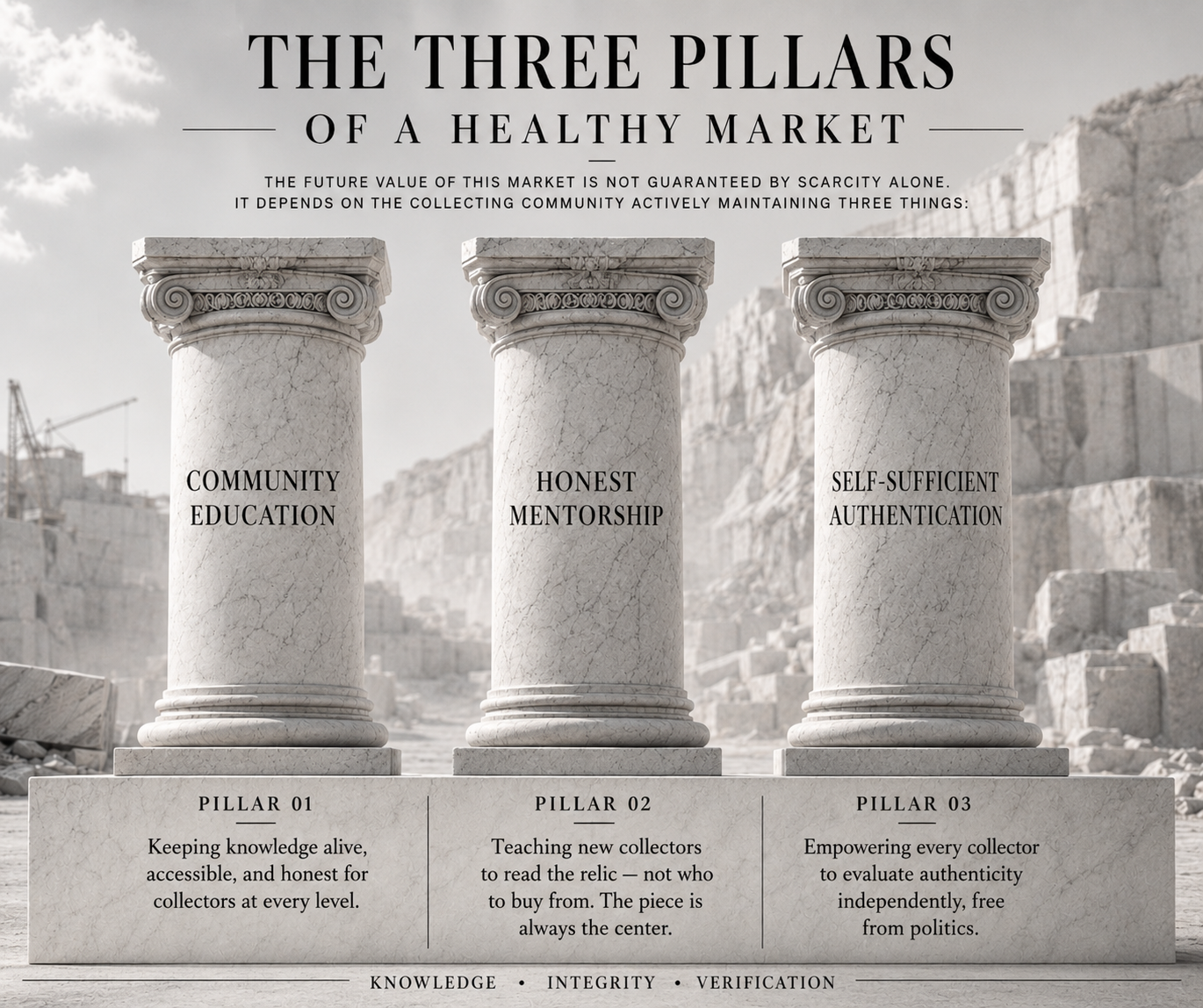
The Three Pillars of a Healthy Market
The future value of this market is not guaranteed by scarcity alone. It depends on the collecting community actively maintaining the principles that keep knowledge honest, accessible, and useful for collectors at every level.
Community education, honest mentorship, and self-sufficient authentication are the foundation of a healthy collecting market.
True mentorship teaches collectors to read the relic — not simply who to buy from. The piece must remain the center.
When collectors are empowered to evaluate authenticity independently, free from politics and personality, the market becomes stronger, more informed, and better prepared for the future.
Knowledge. Integrity. Verification.
True mentorship is relic-centered, not personality-centered. When guidance becomes about who to buy from rather than what to look for, it creates dependency and ultimately fails the collector. The goal of good mentorship is to make itself unnecessary — to send a new collector into the market with enough knowledge to stand on their own.
That is not to say that knowing your source does not matter. There are real pitfalls in this market and buying from known, trusted sellers is a meaningful advantage. But who you buy from should always be a fraction as important as what you are acquiring. A reputable name is one data point. The relic in your hands is the truth.
Knowing your source matters — but it should never outweigh knowing your piece.
When these three pillars are strong, the market becomes something genuinely exciting. It welcomes collectors at every level — from serious investors assembling significant collections to those just beginning to develop their eye. Both matter. Both strengthen the ecosystem. And a growing, educated collector base is exactly what drives long-term value upward.
The ancient past is not going anywhere. Neither is its value — as long as we build a community worthy of preserving it. Invest in the relic. Invest in the knowledge. The rest will follow.